


Off-plan properties have more advantages than just flexible payment terms. For many buyers, the primary advantage comes from the build quality and living standards — and from a legal framework that strictly protects the buyer throughout the construction phase.
Modern Building Standards and Shared Amenities
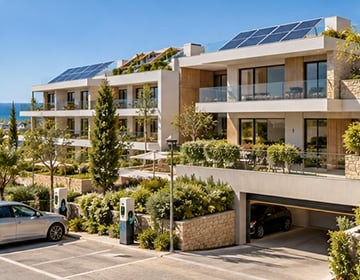
Buying a property off-plan in Spain offers access to contemporary living. These homes typically feature open-plan kitchens, generous terraces, underfloor heating, smart-home automation, and high-spec insulation. Furthermore, on-site amenities such as underground parking, EV charging stations, swimming pools, fitness centers, and co-working lounges are much more common in off-plan and young developments.
While some key-ready properties are relatively young and offer modern features, the vast majority of ready-to-move homes on the market are established resale properties. In these homes, achieving the same standards as off-plan units often requires extensive and costly renovations.
High Energy Efficiency and Lower Running Costs
New developments generally have aerothermal heat pumps, solar panels, and high-efficiency thermal façade systems. As a result, properties are typically delivered with top-tier A or B Energy Performance Certificates (EPC). Unlike the E, F, or G ratings (that is common in properties built before Spain's major energy efficiency updates), A and B ratings help you get noticeable savings on monthly utility bills. In addition, declaring an energy certificate is legally required for both sales and rentals in Spain. Therefore, an off-plan home's running costs can attract more tenants and buyers in the future.
Minimum Maintenance and Structural Warranties
While newly finished turnkey properties come with fresh developer warranties, the wider ready-to-move market consists largely of established resale homes. In these older properties, buyers frequently need to budget for upgrades such as retiling bathrooms, replacing kitchen units, renewing aging plumbing and wiring, or upgrading window insulation. On top of that, unexpected expenses can arise for communal maintenance, such as elevator servicing or roof repairs.
In off-plan projects, all fixtures, materials, and appliances are brand new. More importantly, newly built homes in Spain are legally protected by developer warranties under the Building Management Act (LOE), which drastically cuts maintenance expenses during the first years of ownership.
Legal Framework and Financial Safeguards for Off-Plan Purchases
It is entirely natural to have questions about financial security when buying a home that is still under construction. In Spain, buyer rights are strictly protected under national law (Ley 20/2015). As a result, there is minimum risk when working with reputable developers.
• Dedicated Escrow Account: Your staged payments during construction are never mixed into the developer's general funds. By law, the developer must open a separate bank account (cuenta especial) exclusively for that specific project. Money deposited here can only be drawn to pay for actual construction costs.
• Guaranty Insurance: All interim deposits made before completion are legally secured by a surety insurance. If the developer fails to complete the project on time or according to the agreed conditions, these guarantees ensure your deposited funds are fully refundable.
Step-by-Step Purchase Process for Off-Plan Properties in Spain
Buying an off-plan property in Spain follows a structured, transparent legal framework. Here are the steps:
1. Project Selection
You select a location and development that matches your goals (rental yield, capital growth, or personal living). At this stage, your legal representative checks the planning permissions, building license, and the developer's track record.
2. Reservation
A reservation agreement is signed to withdraw the chosen unit from the market. A nominal reservation fee is typically paid at this stage.
3. Purchase Contract
Around 30 to 60 days after the reservation, both parties sign the main contract. At this point, the buyer pays a deposit of 10% - 30% of the purchase price into the project's blocked bank account.
4. Installment Phase
As construction continues, installments are paid at the milestones set out in the contract. A bank guarantee is issued for every payment, and regular progress reports on the project are provided to the buyer.
5. Occupancy License
Once construction is physically complete, the local municipality conducts a technical inspection and grants the occupancy license. This certifies the building to be fit for habitation. Title deed transfer cannot proceed without this document.
6. Title Deed Transfer and Key Delivery
This is the final stage. The remaining balance of the purchase price is paid, and the title deed is officially registered in the buyer's name.
With over 20 years of experience, our team is closely familiar with the Spanish market. Based in our Alicante and Málaga offices, our local teams and in-house legal experts oversee every legal detail and guide you from the initial search through key delivery and post-handover property management.